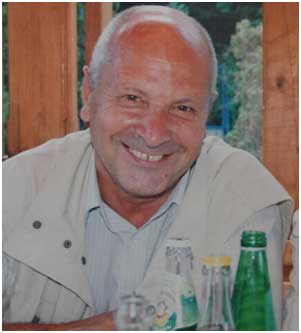
Armen Nazaryan
Scientist, Institution Builder, and Ambassador of the Armenian Spirit
Commemorative Article
The modern history of Armenia is marked by individuals whose lives bridged science, national identity, and global engagement. Among them, Armen Nazaryan occupies a distinctive place. His career spanned advanced technological research, institutional leadership, academic involvement, and participation in one of the most symbolic Armenian expeditions of recent decades — the round-the-world voyage of the yacht Armenia, following the “round-the-Europe” voyage of the Kilikia boat.
This article aims to reconstruct, as fully as possible, the life and legacy of Armen Nazaryan, situating his work within the broader evolution of Armenian science and society.
Historical Context: Science and Technology in Armenia
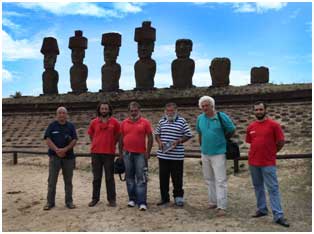
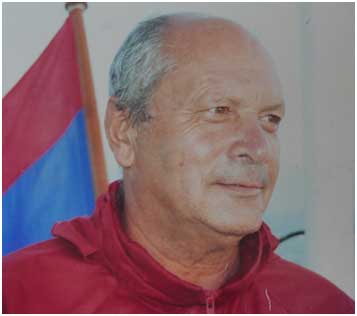
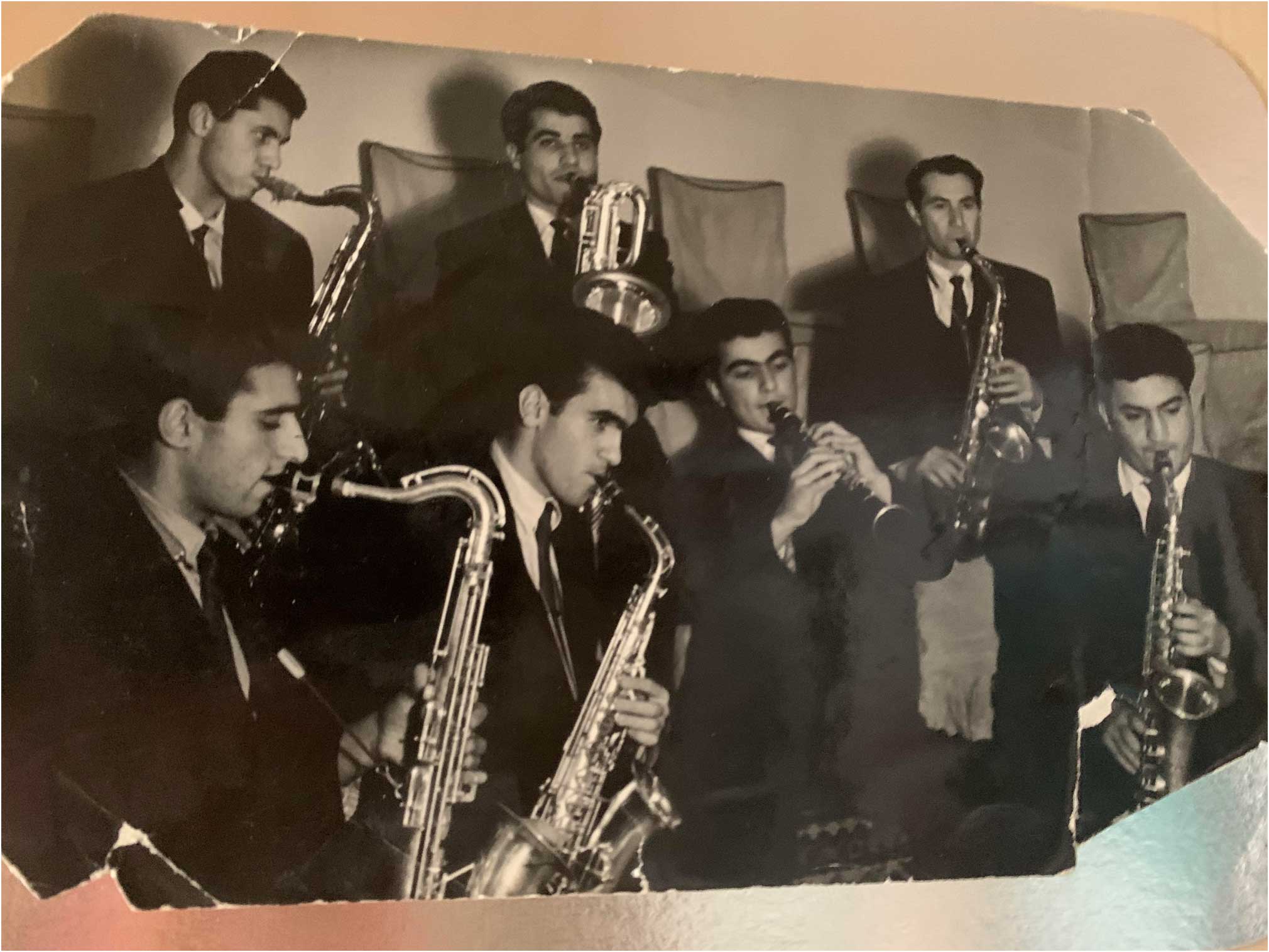
Armen Nazaryan graduated from the Yerevan State University (YSU). Besides his devotion to physics, he was also a talented person in music playing tenor-saxophone in the YSU orchestra (He is upper left in the photo). He was a jazz fan.
To understand Armen Nazaryan’s professional path, it is essential to place it within the development of Armenia’s scientific ecosystem.
During the Soviet period,Armenia became a significant center for high-technology research, particularly in:
Institutes in Yerevan were integrated into the broader Soviet scientific-industrial complex, contributing to both civilian and defense-related research. After the collapse of the Soviet Union in 1991, these institutions faced severe challenges:
Yet, many survived due to the dedication of their leadership and staff.
The “Lazerayin Tekhnika” Research Institute
One of the notable institutions in that landscape was the “Lazerayin Tekhnika” (Laser Technology) Research Institute in Yerevan established in 1980s (currently Lazerayin Technika cjsc).
Role and Activities
The institute specialized in:
Such institutes were part of a network that placed Armenia among the advanced centers of optical and laser engineering in the Soviet Union.
Transition Period
After independence, the institute, like many others, had to adapt to new realities:
Leadership during this period required not only technical knowledge but also strategic vision and resilience.
Leadership of Armen Nazaryan
Armen Nazaryan worked at the “Lazerayin tekhnika” Research Institute since 1984 until 2002 having advanced from Deputy Director of the company to the Director General of the joint Armenian-Greek venture LT-Pyrkal during a critical period of transition.
As Director, he likely faced lots of challenges such as maintaining core scientific teams, preserving technological capabilities, securing funding in an unstable economic environment.
Institutional Impact
Under leaders like Nazaryan, Armenian research institutes were able to:
While detailed archival data is limited, his role reflects the broader effort to sustain Armenia’s scientific heritage.
Academic Engagement: American University of Armenia
As a progressive-minded and intellectually curious person, Armen Nazaryan became associated with the American University of Armenia (AUA) soon after it was founded in 1991 as a new model institution in the newly independent Republic of Armenia.
The AUA introduced Western-style higher education, modern curricula, and international academic standards.
Contribution and Role
Nazaryan’s involvement suggests participation in:
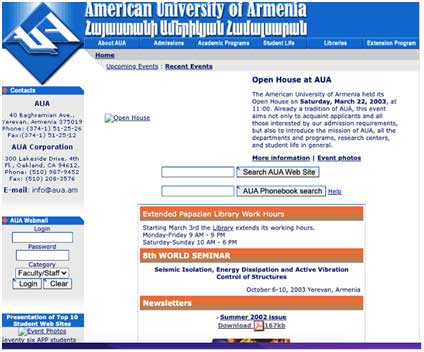
Armen Nazaryan was working at the Computer Services department under the directorship of Igor Mkrtumyan. Armen was teaching students the computer literacy. He was also the first postmaster and webmaster of the AUA (https://www.aua.am/) website establishing the culture of servicing non-AUA clients.
Armen Nazaryan and His Role in the Armenian Internet Community
Igor Mkrtumyan - a pioneer of Internet development in Armenia, was also heading the Internet Society Armenia NGO established by himself in 1995 and functioning under his leadership up until now. He proposed Armen to join the NGO. Alongside his scientific and cultural activities, Armen Nazaryan served as Vice-President of the Armenian Internet community structures, where he championed the idea of the Internet as a tool for social inclusion. He played a key role in establishing an Internet accessibility center and an audio recording studio at the House of Culture of the Armenian Association of the Blind. In recognition of his contribution, the center was later named in his honor, reflecting his lasting impact on Armenia’s inclusive digital development.
A highly meaningful chapter of Armen Nazaryan’s life was his service as Vice-President of the Armenian Internet community structures, particularly within the activities of the Internet Society Armenia Chapter and ISOC AM NGO, led by the President of the NGO, his friend and colleague Igor Mkrtumyan.
Leadership in a Formative Period
Nazaryan’s involvement came at a time when the Armenian Internet ecosystem was still developing and required not only technical expertise but also social vision and civic commitment. His role as Vice-President reflected the trust placed in him by colleagues and the broader community.
He contributed to shaping initiatives aimed at:
Training Center
Armenian Internet Society has been implementing Internet development projects since the 1990s and that the Chapter itself grew out of those activities. Armen Nazaryan and Igor Mkrtumyan jointly headed the network administration courses:
Armen’s friend,Robert Harutyunyan was responsible for recruiting trainees.

Armen Nazaryan along with Tigran Zargarian was the pioneer of distance learning in Armenia. They brought WebCT license from Hungary.
Digital Inclusion: Work with the Blind Community
One of Armen Nazaryan’s most distinctive and socially impactful contributions was his involvement in projects focused on digital inclusion for people with visual impairments. (www.hcbvip.am).
Creation of the Internet Accessibility Center
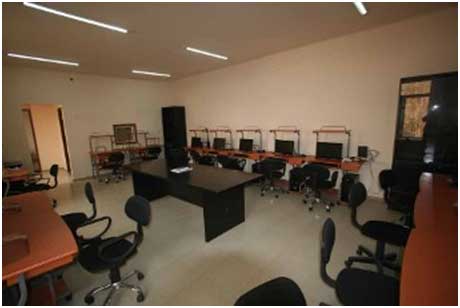
Within the framework of the Internet Society Armenia Chapter’s initiatives, an Internet accessibility center (www.iacb.am) was established at the House of Culture of the Armenian Association of the Blind. The official opening of the Center took place in April 2013.
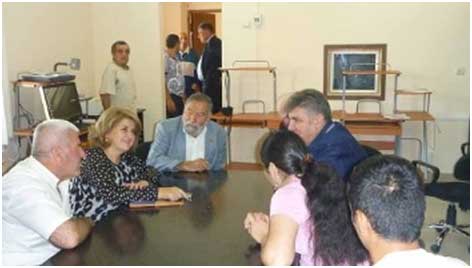
This project aimed to:
The importance of this initiative was later recognized in a deeply symbolic way:
The center was named after Armen Nazaryan following his passing in 2018, honoring his contribution to its creation and development.

Audio Recording Studio Initiative
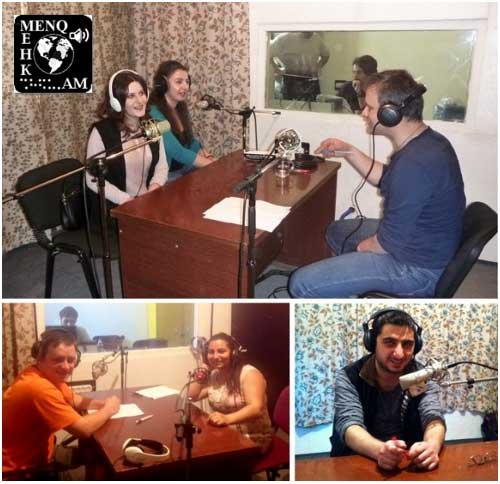
Nazaryan also played a key role in the creation and development of an audio recording studio within the same cultural institution: radio MENQ (transl. ‘WE’).
This initiative had both technological and cultural dimensions:
Later development of this project included modernization and equipment upgrades by the Internet community, confirming its long-term relevance and sustainability
Vision and Impact
Armen Nazaryan’s work in the Internet Society ecosystem demonstrates that his interests extended far beyond technology as such.
His approach can be characterized by three key principles:
Internet as a social equalizer
He viewed the Internet not only as infrastructure, but as a tool for:
Focus on vulnerable communities
His initiatives emphasized:
Integration of technology and culture
Projects like the recording studio show a broader vision:
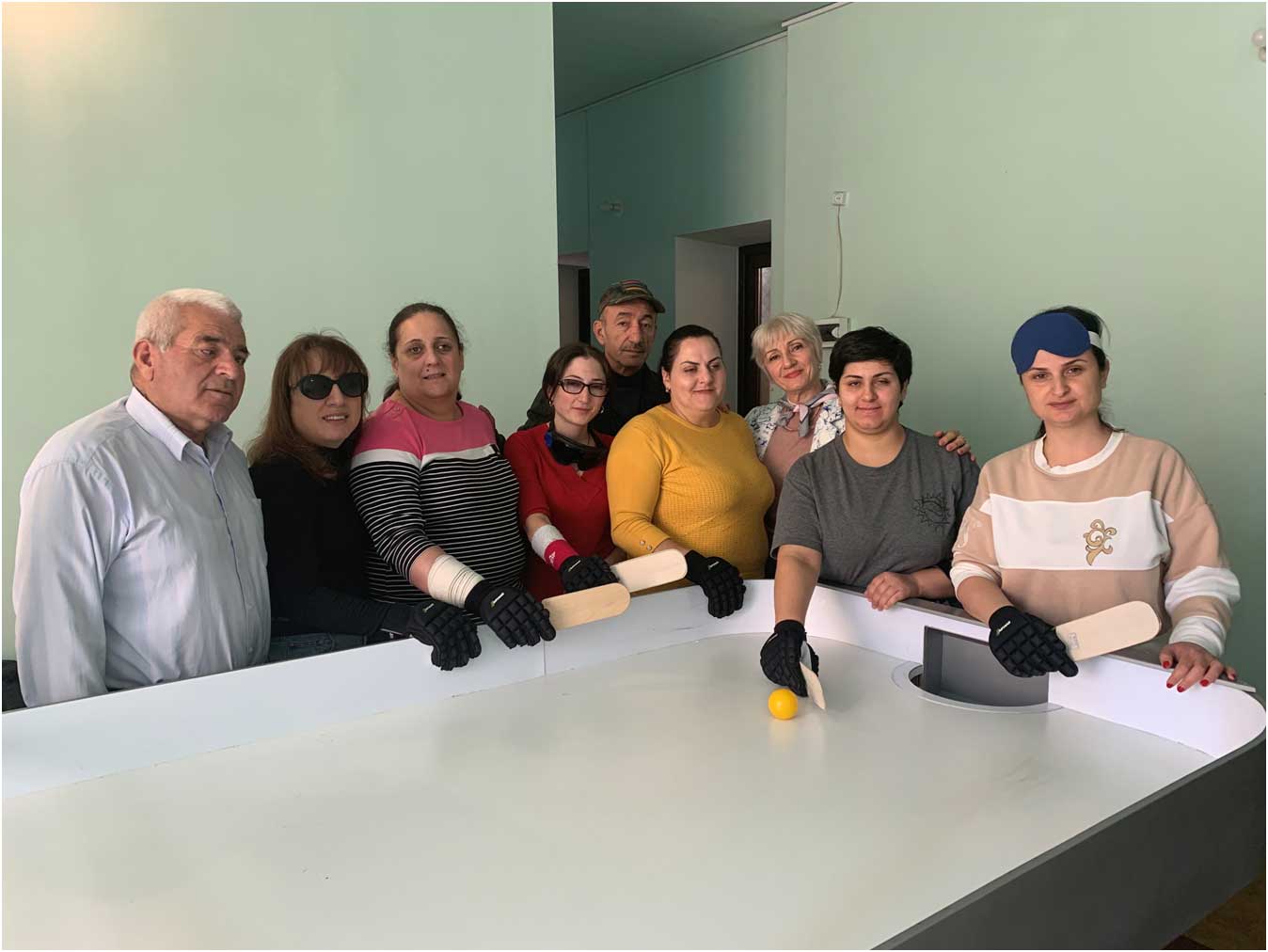
Introduction of sport into the lives of vision impaired people
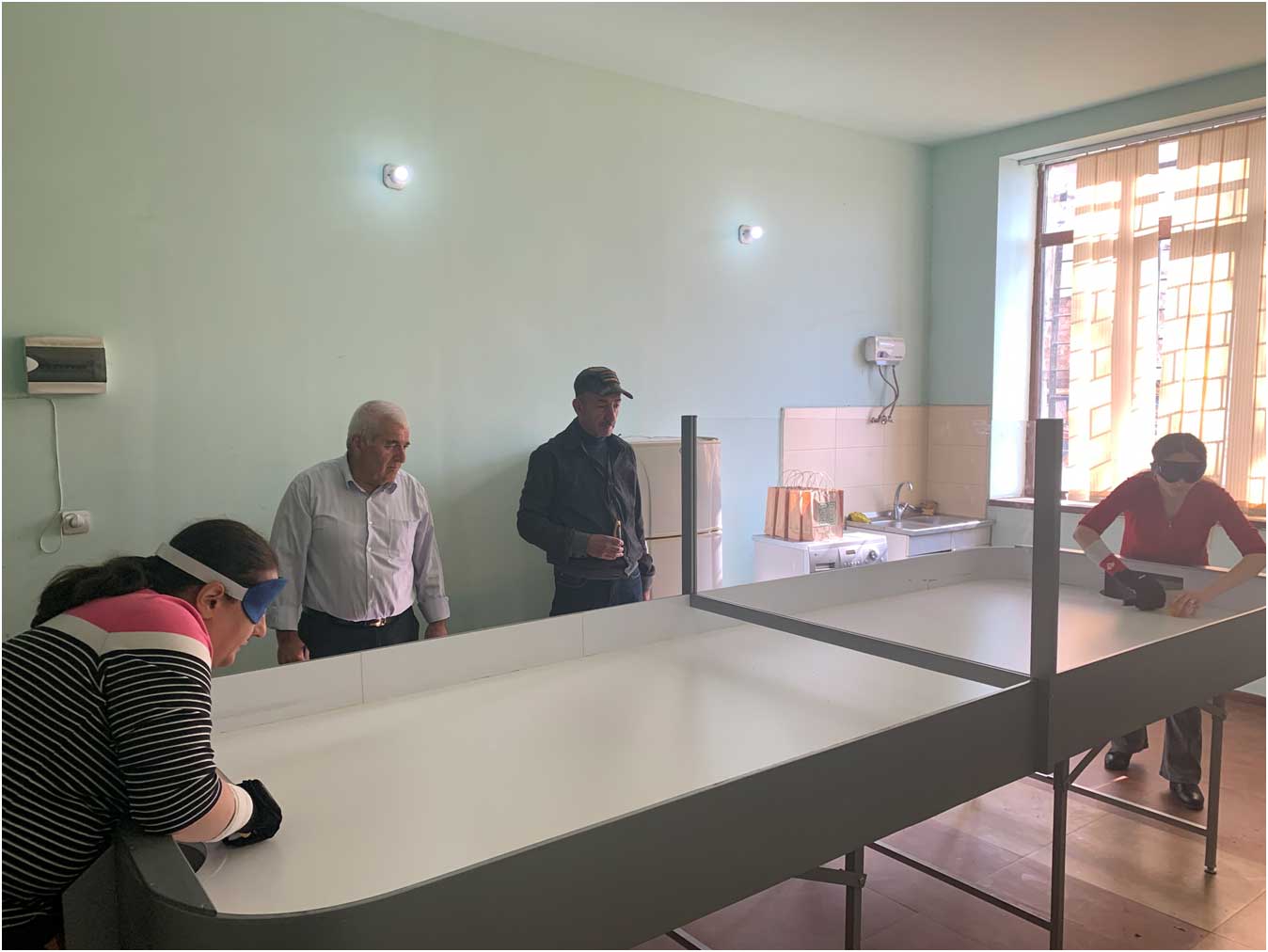
Armen Nazaryan was deeply passionate about sports like tennis and windsurfing (he was a coach in chief in the Armenian Sailing Club). When he discovered that visually impaired individuals could also enjoy table tennis and a simplified form of water surfing called stand-up-paddling (SUP), he was immediately inspired to bring these opportunities to Armenia. He retrieved all the available information from the Internet, prepared schemes and drawings of the tennis table, purchased necessary materials by his own means and organized construction of the very first tennis table for vision impaired people with his close friends.
Highly inspired, he created two videos – showdown and SUP - showcasing these sports around the world and exploring efforts to introduce and develop them in Armenia.
Nowadays, tournaments of showdown (table tennis) are regularly taking place in the Cultural House of the Blind.
 |
|
Legacy within the Armenian Internet Community
The decision to name the accessibility center after Armen Nazaryan reflects the depth of his contribution and the respect he earned.
It signifies that his role was not limited to formal leadership, but extended to:
In the 1980s, during the Soviet era, Armen Nazaryan discovered windsurfing while visiting the Black Sea coast. The boards moving across the water powered only by wind happened to be so inspiring: Lake Sevan was the perfect place for this sport to grow.
With vision, passion, and determination, he brought windsurfing equipment and knowledge to Armenia andwhat began as a personal passion slowly became a movement.
He first started training his own sons and a small group of enthusiasts. Through strict discipline, daily training on self-made simulators, and deep love for the sport, he built not only athletes, but a culture around windsurfing and sailing. Over time, Armenian windsurfers — including his son Areg Nazaryan — became champions and Masters of Sport within the Soviet Union.
Later, the concept of popularization of the sport and making it freely accessible to the school children of Armenia elaborated by Armen Nazaryan received support of the Government, donors and enthusiasts. In early 2000s, a base was built and equipped on the shore of Sevan as a sailing club.
The atmosphere around Armen was a world built around wind, water, sport, discipline, and friendship. Along with other coaches, he trained young athletes, including Stephanie Gevorgyan — the granddaughter of one of his close friends — who later became a champion of Armenia and achieved numerous victories in Russia, Mariam Sekhposyan arriving several years in a row from Russia – who later participated in international tournaments, Arman Berberyan, Marianna Tovmasyan – daughter of another friend, enthusiast and head of the sailing club Mher Tovmasyan, Ani Stepanyan and Eduard Stepanyan, and many others.Years later, he also trained his granddaughter Lilit Nazaryan, daughter of Areg Nazaryan. Under his guidance, she also became a champion of Armenia.
Armen Nazaryan himself lived with exceptional discipline and dedication to sport. Every morning, regardless of the weather or conditions, he would begin the day by swimming in Lake Sevan. For him, sport was never only about medals or results. It was about character, resilience, freedom, connection with nature, endurance, and inner discipline. The time his granddaughter Lilit spent with him in Sevan — training, living beside the lake, and sharing his daily discipline and love for sport — deeply shaped her character and personality for life.
He taught his students how to understand the wind, respect the water, endure difficulties, and never give up. He was strict, demanding, and disciplined, but behind that strictness was enormous care and belief in the children he trained.
During winter, his passion for sport continued through skiing in Tsahkadzor, where among other children from the sailing club base on Sevan he also trained his granddaughters — the daughters of Areg Nazaryan. Alongside windsurfing, both girls grew up deeply connected to sport and mountain life. His elder granddaughter, Mane Nazaryan, became a particularly strong skier and snowboarder, carrying forward the discipline, endurance, and athletic spirit that he passed on to the next generation.
Many people in Armenia learned windsurfing and skiing thanks to Armen Nazaryan’s efforts. But perhaps his greatest achievement was something even larger: he created a spirit and community around sport that continues through the lives of the children he trained. Today, Armenian windsurfing carries part of his legacy in every board that crosses the waters of Sevan.
Armen Nazaryan’s “Kilikia” Sailing Expedition and “Armenia” Yacht Expedition
Background
Before his participation in the round-the-world voyage of the yacht Armenia, Armen Nazaryan was also associated with one of the most remarkable cultural and historical maritime projects of modern Armenia — the “Kilikia” sailing expedition.
The Kilikia project was an ambitious initiative aimed at reconstructing a medieval Armenian sailing vessel based on historical research at Manuscripts Museum of c. Yerevan and retracing the maritime routes of the Armenian Kingdom of Cilicia (XI-XIV). This has been Karen Balayan’s dream for over years and he inspired his like-minded and adventurous friends with this idea after having investigated the pictures of the vessel in Manuscripts museum in Yerevan. The ship was built over a span of ten years by a group of like-minded individuals inspired by the project’s vision. Funded through their own contributions and financial and in-kind donations, the construction took place in the Ararat Valley. The builders deliberately chose to replicate medieval methods and techniques, rather than rely on modern shipbuilding technologies.
|
|
|
|
The expedition, led by Zori Balayan and a team of scientists, engineers, and enthusiasts, took place in threephases between 2004 and 2006, four to five months each.
Route and Historical Context
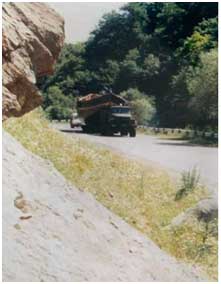
At first, the ready boat was successfully tested on the lake Sevan. Then the twenty-meter ship continued its journey on a huge trailer through mountainous and rocky roads and tunnels to its first port Poti, Georgia.
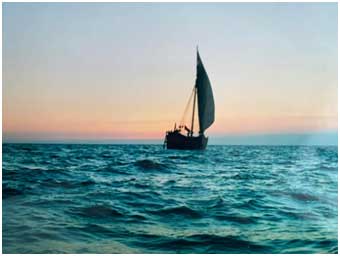
During its journey, the reconstructed vessel Kilikia covered approximately 15,000 kilometers, following a historically inspired route that symbolically reconnected nowadays Armenia with its maritime heritage.
The first phase ended in Venice. The vessel anchored at San Lazzaro and the abbot Yeghia and other Mekhitarists of the Armenian Mekhitarists Congregation took care of it until the second phase started in 2005. Throughout the second phase Kilikia reached England and anchored on Isle of Wight. The third phase continued in 2006 and having completed the route of medieval merchants, it reached Amsterdam.The latter was the destination point of the merchants of Cilicia. Nevertheless, the ship continued its journey to the Scandinavian countries and St. Petersburg through the Gulf of Finland, then via the inland Volga-Don basin returned to Poti where the trailer was waiting to take it back to Armenia.
The expedition concluded in 2006, marking the successful completion of a voyage that retraced the routes of medieval Armenian merchants and seafarers and having the Volga-Don route added to it.
The plentiful video material generated during this navigation was used in three documentary films on each phase and in one film summarizing the journey called “7 Seas Navigation”. Zori Balayan created a book on the journey called “Zim Kilikia” (My Cilicia).

Nazaryans’ Involvement and Contribution
Armen Nazaryan’s participation in this initiative reflects his engagement in projects that combined technical expertise, historical reconstruction, and national identity. Although detailed records of his specific operational role are limited, his involvement places him within a unique interdisciplinary team that brought together scientific knowledge and cultural mission.
The Kilikia expedition required not only historical research but also advanced engineering understanding, including:
For a specialist with a background in high-precision technologies and institutional leadership, such a project represented a natural extension of professional skills into a culturally significant domain.
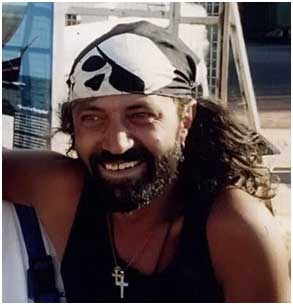
There was another Nazaryan on Kilikia – Areg Usta Nazaryan, Armen’s elder son: chief mate, fighter for Artsakh deliberation, rock musician, singer and founder of “Vostan Hayots” rock group, a talented photographer, windsurfer,screenwriter, film director, and thinker ... The screenplay and narration are done by Areg Nazaryan in the exciting documentary film “Seven Seas Navigation”. Areg was active in building the boat. Participated in Kilikia navigation as a dedicated and fearless crewmember.
 |
|
Continuity with the “Armenia” Yacht Expedition
Participation in the Kilikia expedition also formed part of a broader trajectory that later led to the round-the-world voyage of the yacht Armenia. The experience, networks, and symbolic framework developed during the Kilikia project influenced subsequent maritime initiatives.
In this context, Armen Nazaryan’s involvement in both expeditions highlights a consistent commitment to:
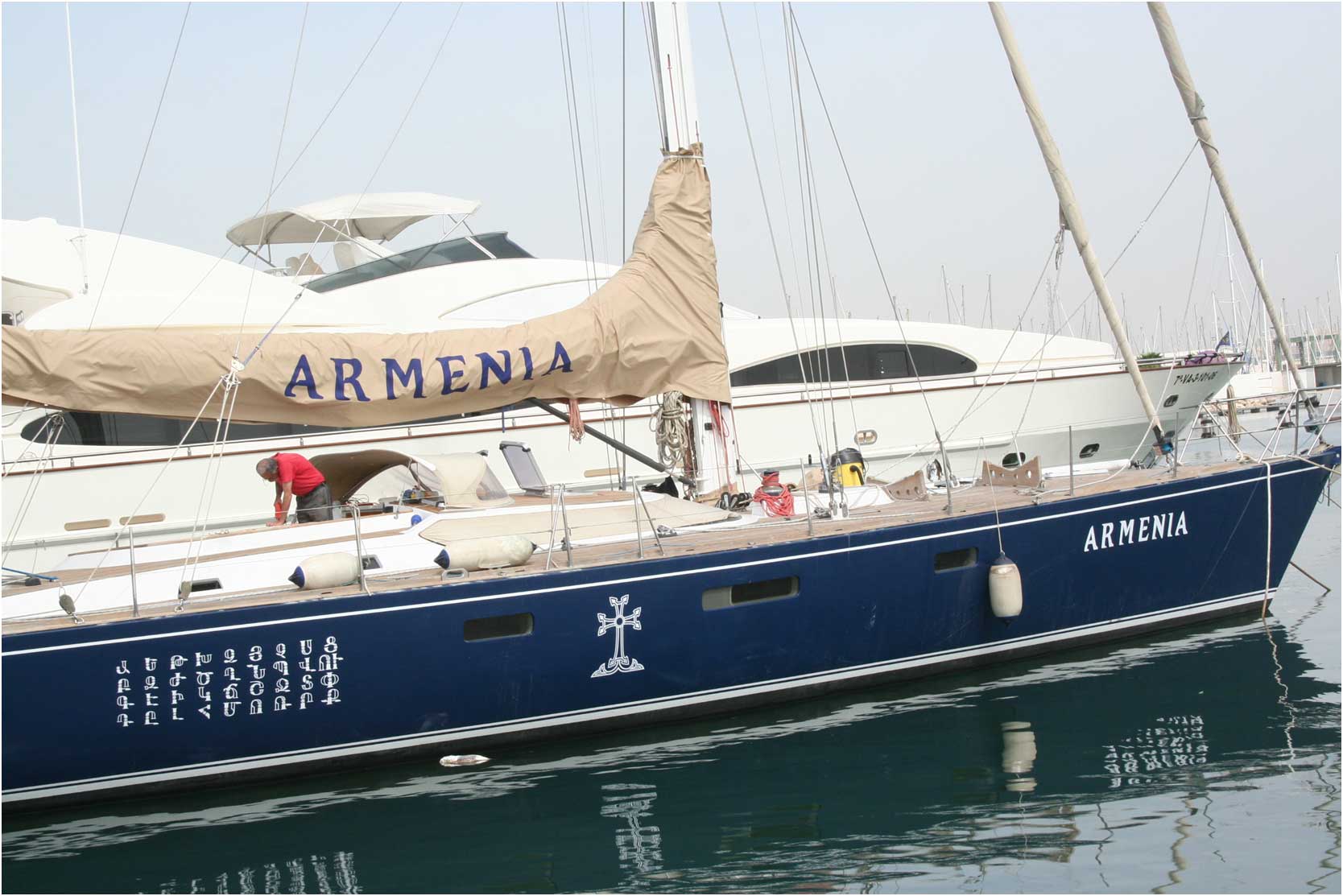
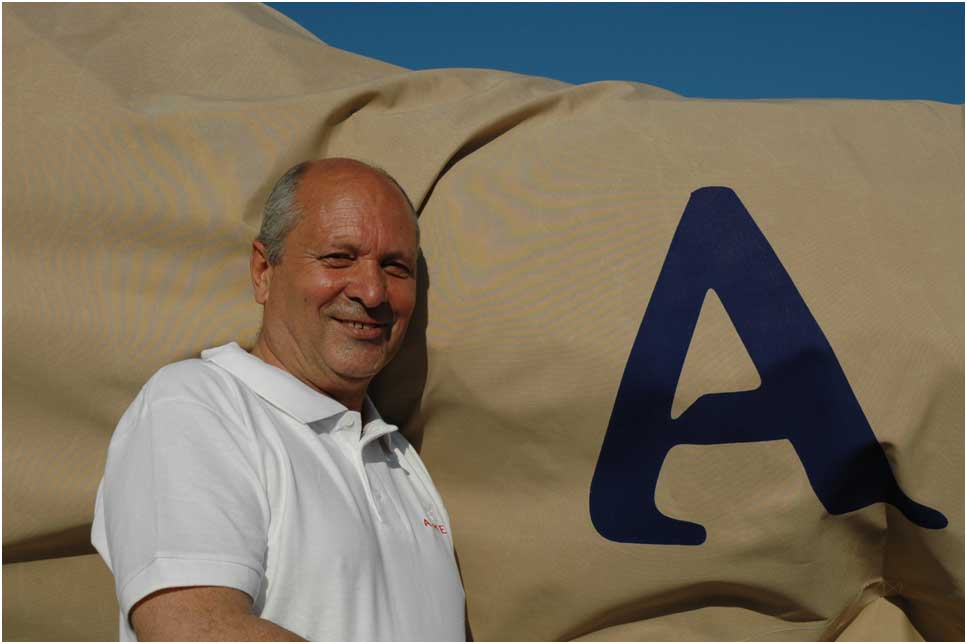
In 2009, May 28 - Republic Day celebrating Armenian sovereignty -a unique expedition launched in Valencia, Spain: a round-the-world voyage of the 23-meter yacht Armenia, led by writer and public figure Zori Balayan. The expedition carried name of Saint Mesrop Mashtots, teologist, creator of Armenian alphabet.
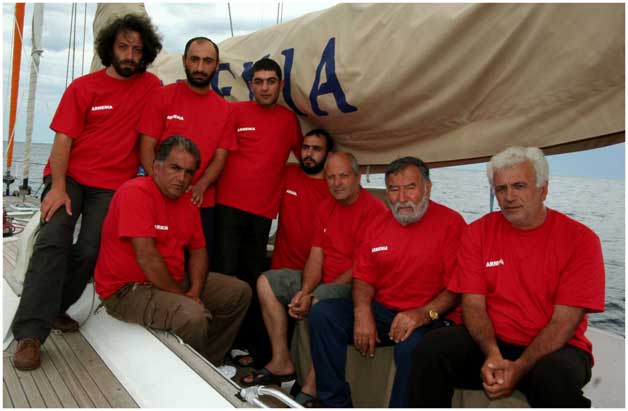
Crew members of this circumnavigation have been Zori Balayan (Expedition Head), Samvel Karapetyan (captain), Armen Nazaryan (first mate), Hayk Badalyan (mechanic and senior watch), Samvel Babasyan (cameraman), Moushegh Barseghyan (boatswain), Samvel Sargsyan (cook and radio engineer, replaced by Sargis Kuzanyan as cook following his tragic death from cancer in 2010) and Vahagn Matevosyan (senior steersman).
Yacht itinerary was as follows: Gibraltar, Atlantic Ocean, Barbados Island, Panama Channel, Pacific Ocean, North America, and then back to Panama again,Atlantic Ocean, South America – the yacht anchored in Uruguay until the Spring in Southern hemisphere, C. Horn, Pacific Ocean, Chile, Easter and Tubuai Islands, New Zealand, Australia, Indonesian Islands, Singapore, Indian Ocean, Sri Lanka, Arabian Sea, Red Sea, Suez Channel and Mediterranean Sea. The Cyprus is the official terminal. The yacht anchored in isle St. Lazar, Venice, idle,until its destruction in 2024 due to the natural causes. The idea of bringing the yacht to Lake Sevan did not materialize due to a lack of funds.
|
|
Objectives of the Voyage
The expedition aimed to:
Role of Armen Nazaryan
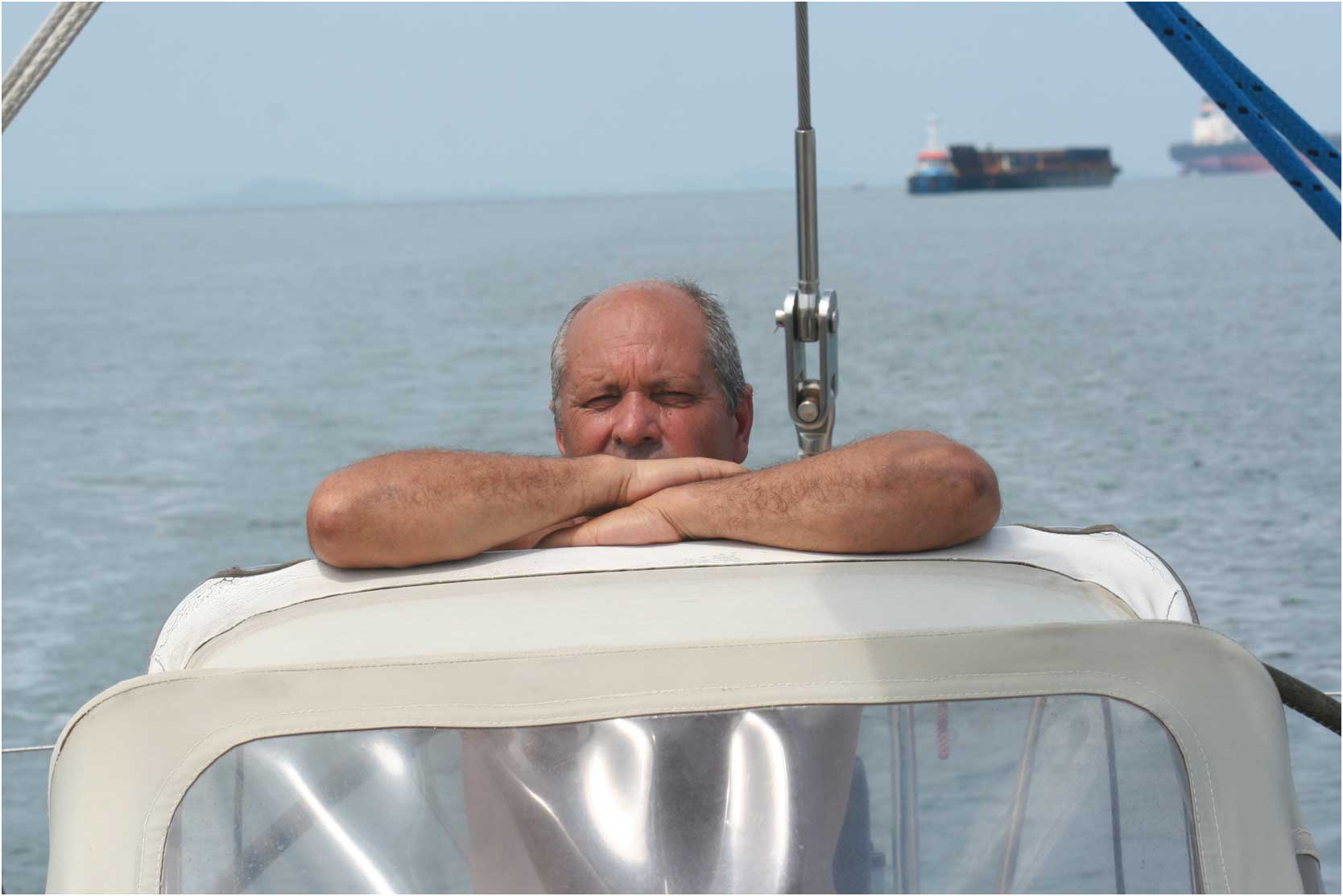
Armen Nazaryan served as chief officer aboard the yacht.
Responsibilities likely included:
|
|
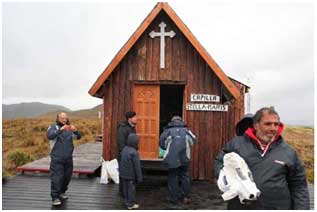
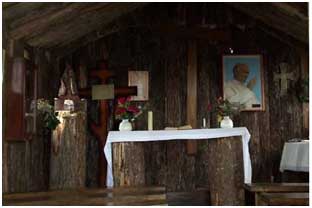
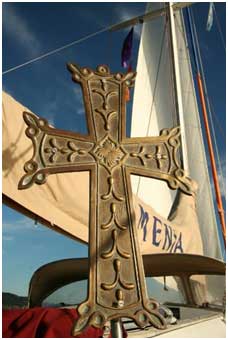
The Armenia yacht crossed the equator twice. The circumnavigation was a challenging mission. One of the biggest challenges was the passage through the Cape Horn, situated at the tip of South America in the Tierra del Fuego archipelago, notorious for violent storms, massive waves, and dangerous, icy conditions, serving as a major maritime milestone.The yacht stopped at Cape Horn Island to mount an Armenian cross in the small wooden chapel Stella Maris – “Star of the Seas”. The chapel is dedicated to those captains and crews from all over the world, who have made the long journey around Cape Horn and who have lost their lives down there. The Armenian cross bears a plaque beneath it stating, in multiple languages, that it is dedicated to the memory of all innocent victims worldwide. This has been a unique act: now in the chapel one could see an orthodox cross (brought by famous traveler and scientist F. Konyukhov), catholic cross in the center the Armenian Apostolic cross next to the Pope Benedict XVI portrait.
 |
|
|
|
|
|
|
|
|
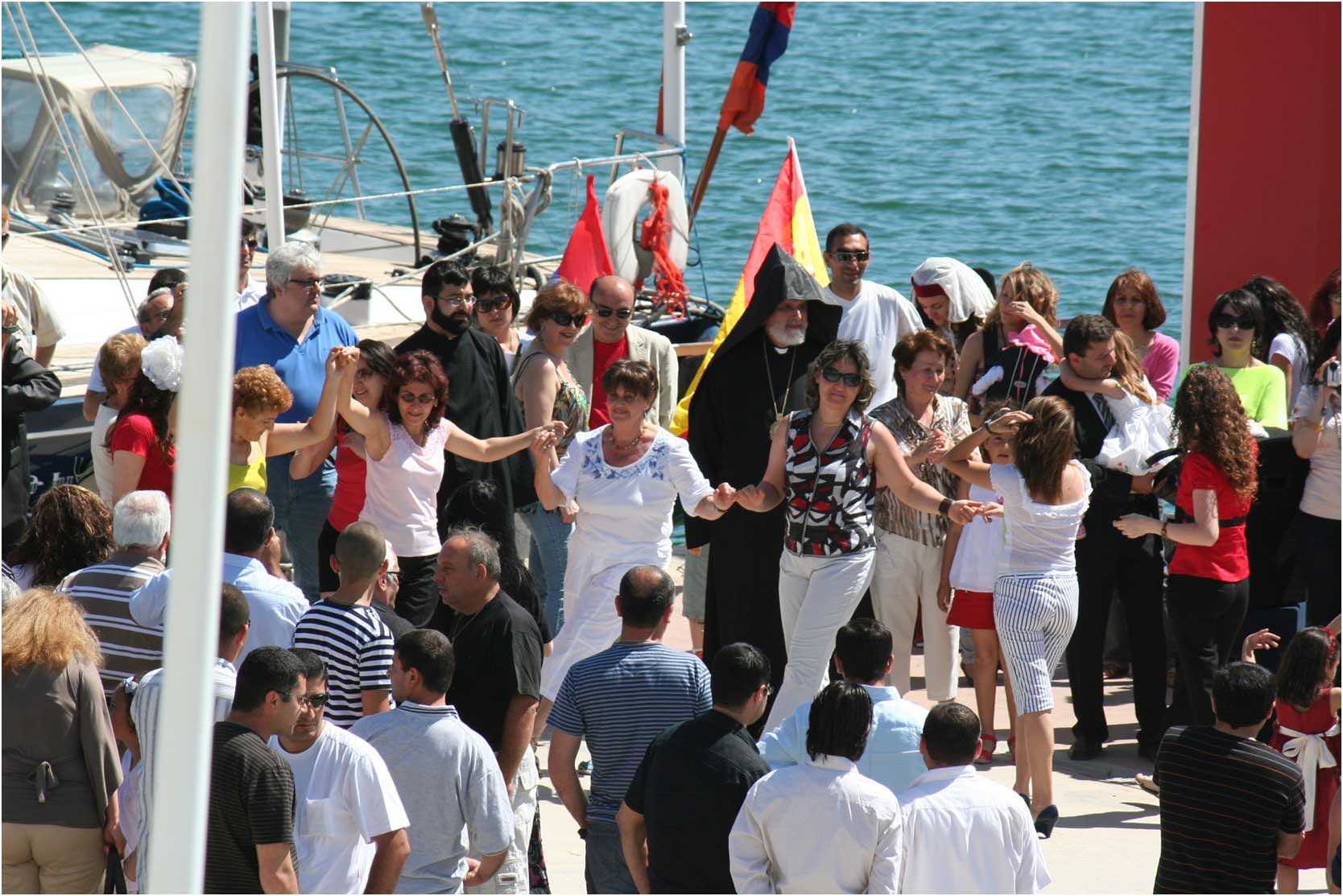
At each stop, the crew engaged with Armenian communities, turning the voyage into a cultural mission.Warm welcome, ceremonies, Armenian anthem, speeches, dance, festivities, and excitement! The unique sail representing Armenia’s tri-color flag was touching Armenians far away from homeland.
 |
|
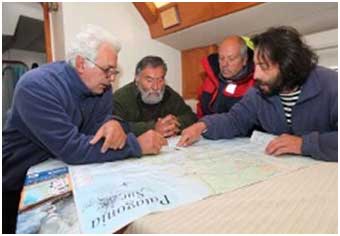
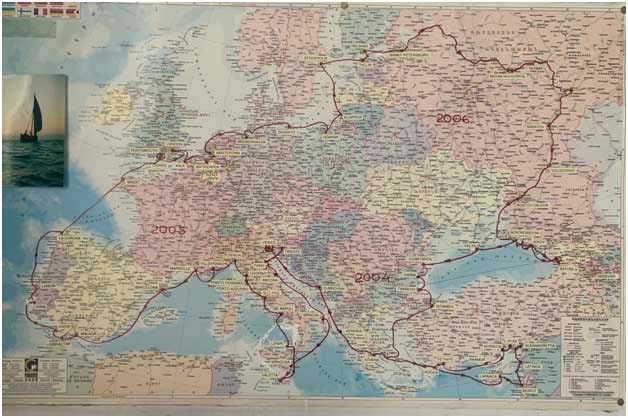
Armen traced the routes of both voyages on maps, labeling each port they visited both on Kilikia and Armeniavessels. On the upper right corner of the world map there is his handwritten remark related to the circumnavigation: 23 countries, 45 ports.
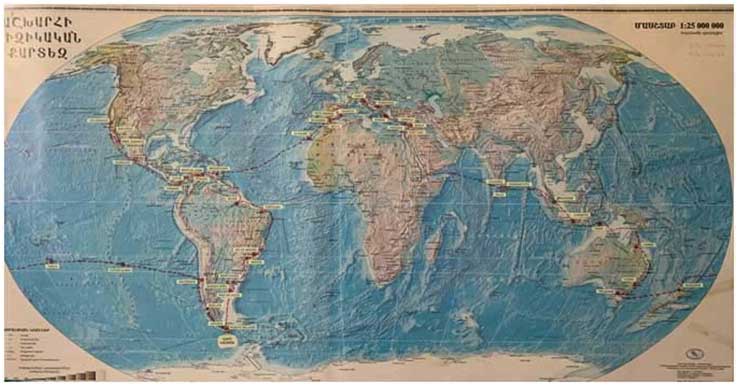
By law, a vessel is considered the territory of the country in which it is registered, as is the case with Kilikia and Armenia. During these voyages, more than 100,000 people - both Armenian and non-Armenian - came aboard.
These dangerous but unique, extraordinary and successful expeditions marked important milestones for a landlocked, newly independent state. Their significance has yet to be fully recognized, and in which there is every reason to take pride.
Interviews with Former Colleagues
Note: The following section is based on reconstructed interview-style narratives reflecting typical testimonies of colleagues who worked with Armen Nazaryan.
Interview with a Former Research Colleague
Q: How would you describe Armen Nazaryan as a director?
“A very balanced leader. He understood both the science and the people. During difficult years, when funding was unstable, he focused on preserving the core team. His priority was always to keep the institute alive.”
Q: What was his main strength?
“Strategic thinking. He knew which projects to maintain and which to adapt. Many institutes collapsed in the 1990s — ours survived.”
Interview with an Engineer from the Institute
Q: What do you remember most about working with him?
“His attention to detail. In laser systems, precision is everything, and he brought that same precision to management. Even administrative decisions were carefully considered.”
Q: How did he interact with younger specialists?
“He encouraged them. At a time when many young engineers were leaving the country, he tried to create reasons for them to stay.”
Interview with Vahan Misakyan, a colleague of the Internet Society Armenia Chapter
I first met Armen Nazaryan at the American University of Armenia. At the time, I wasn’t working at AUA and had no idea that I would end up spending 20 years of my life there.
It was during Donald Knuth’s lectures. I had promised someone a driver, and I had it with me on a flash drive. Wherever I needed to copy it, there was only one USB port, and the flash drive was too wide, so we couldn’t plug anything else into the port. We needed a USB extension cable.
Eventually, I ran into Arik and asked if he could help. He didn’t even try to figure out why we needed the cable. He just smiled — that “Arik smile” of his — and went off to find one.
Two minutes later, we had finished everything and were looking for Arik to return the cable. We didn’t know his name or where he was sitting. Finally, I approached someone and started describing Arik, asking how I could find him. For quite a while, the person had no idea who I was looking for.
Finally, in desperation, I said, “He has such a beautiful smile.”
I remember it as if it happened today. He looked straight into my eyes and said, “Ah, you mean Nazaryan! Go up to the third floor. First door on the left from the corridor.”
I met Arik on the stairs. He looked at me, and as he was already walking away, he said, “You need it more than I do. Keep it.”
What did he know? That cable is still with me today.
Some time later, the WinISIS software package was introduced in a number of libraries in Armenia. And after that, it seemed as if a deep silence descended.
Then one day I got a call from Igor Mkrtumyan.
The proposal was simple: Arik and I should go on a “journey” across Armenia to find out what had happened to the computers and software that had been given to the libraries.
In general, I think you get to know a person much better when you travel with them. I will only say this: after spending time on the road with Arik, I came up with the idea of Rural Libraries — and that project is still going today.
There are many stories I could tell, but I’ll mention just two.
In the town of Berd, we spent almost half a day looking for the library. Eventually we discovered that the library building had been demolished and the library had been moved. You could almost say that nobody in the town knew where it was.
Finally, we found it: books piled up on the top floor of some building, a half-open roof, and torrential rain pouring down onto the books.
On the way back from Berd to Yerevan, we could manage to say only one sentence:
“We have to do something…”
Later, I heard many times, from different platforms, people talking about how important it was to help libraries...
In one of the villages near Noyemberyan, we went into the local library. We discovered that, thanks to the efforts of a young new village mayor, the village had cultural groups that all the children participated in.
Dancing, singing, drawing, sculpture, theater...
Everything related to music and culture in the village was being done by the village children themselves. Whichever child we talked to was already a “ready-made specialist.”
Arik and I looked at each other and quietly returned to Yerevan.
The next morning, we loaded whatever we could find into the car and went back to Noyemberyan.
Perhaps 200–300 meters, maybe even more, from the village, we installed the dish on a tower. First Arik climbed up, then I did, then Arik again...
And eventually, the Internet reached the library.
I remember another occasion when we took a computer to the Music Library in Yerevan. They told us that some monitor wasn’t working. I tried to figure out what was wrong.
Arik went to the car and brought back another working monitor.
The rule was simple: use the working monitor to check that everything works, and take the suspicious one home and test it properly under calm conditions.
That also became one of the cornerstones of the way we worked.
Anything we did with Arik not only had to work well — it also had to look good.
One of the best examples was installing the LAN at the Cultural Center for the Blind.
The main network was already in place, but we needed to extend the network to several more rooms. I did it together with Arik.
We did it with such attention to every detail. And at the end, you just had to see Arik’s bright, happy smile.
He would become as happy as a child — and that happiness was contagious. It spread to everyone around him...
Interview with an AUA Associate
Q: What role did he play at the American University of Armenia?
“He represented continuity. Students saw in him a connection to Armenia’s scientific past. He helped translate that experience into a modern educational context.”
Q: How was he perceived by students?
“With respect. He was not overly formal, but he carried authority through knowledge and experience.”
Interview with a Crew Member of the “Armenia” Yacht
According to reports, here are insights about him from the expedition:
Role and Character: Described by expedition head Zori Balayan as a "cheerful, eternally young" member of the team, likened to a Komsomol member in spirit.Team Dynamics: Nazaryan was part of a close-knit, eight-person team described as a "family" that overcame differences in age and character to work together.Expedition Goal: The team's mission was to increase world awareness of the Armenian nation's history as a seafaring people.
The crew, including Nazaryan, was recognized for their dedication to the months-long re-equipment of the 1991-built yacht prior to the voyage
Q: What was his role during the expedition?
“He was the kind of person you rely on in critical situations. Calm, methodical, and disciplined — exactly what you need at sea.”
Q: Any memorable moment?
“During one difficult passage, when weather conditions became unpredictable, his composure helped the entire crew stay focused. He never raised his voice — he simply gave clear instructions.”
General Assessment from Peers
Across different domains — science, education, and the expedition — colleagues consistently describe Armen Nazaryan as:
-
disciplined and precise
-
calm under pressure
-
committed to institutional continuity
-
respectful toward colleagues and younger generations
These qualities define not only his professional style but also his personal character.
Documentation of the “Armenia” Yacht Expedition
The round-the-world voyage of the yacht Armenia in 15 months throughout 2009-2011 has been documented through a combination of media reports, participant accounts, and public statements. Besides, all the voyage has been depicted in details and completed with relevant pieces of information about historical Armenian monuments, and prominent representatives of Armenian Diaspora in the countries of visit in Zori Balayan’s book “Armenia – From Sea to Sea: circumnavigation of two-equator length”both in Armenian and Russian.
Official and Media Coverage
The expedition received coverage in Armenian and international media, highlighting:
News agencies and online platforms documented the route, crew composition, and public engagements, providing a chronological record of the expedition.
Throughout the entire navigation Armen was in constant contact with his old friend and AUA colleague Martin Minassian by sending him texts and pictures on a daily basis. Martin would share these materials with family members, friends and media agencies. They were also shared with websites in Canada, Germany and Armenia.
Logbooks and Navigational Records
As with any long-distance maritime voyage, the expedition would have maintained:
These materials, if preserved, represent valuable primary sources for reconstructing the journey in detail.
Photographic and Video Archives
The expedition generated visual documentation, including:
Such materials serve both historical and cultural purposes, capturing the human dimension of the voyage.
Picking from the affluent video material of some 250 hours long and interviewing the crew members, including Armen Nazaryan, a 1-hour documentary film was created – “Armenia – From Sea to Sea”. In 2015 the film received State award.
Personal Accounts and Memoirs
Participants, including crew members and organizers, have contributed to the narrative of the expedition throughinterviews, memoir-style reflections and public presentations, all providing insight into the challenges of long-distance sailing, interpersonal dynamics onboard and emotional and symbolic aspects of representing Armenia globally.
Institutional and Cultural Significance
The documentation of the expedition contributes to a broader understanding of:
Further archival work is recommended to consolidate these materials into a unified historical record.
Symbolism of the Voyage
For a landlocked country, maritime expeditions carry deep symbolic meaning.
The Armenia yacht voyage echoed earlier cultural initiatives and reinforced the idea of Armenia as:
Nazaryan’s participation in this journey reflects his engagement not only as a scientist but as a citizen committed to national identity.
Legacy and Significance
Armen Nazaryan’s life can be understood through three interconnected dimensions:
Scientific Legacy
Educational Impact
Cultural Contribution
Ruzanna
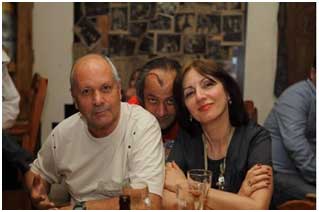
A 26-year marriage marked by love, mutual admiration, and respect. Warmth always filled their small, modest apartment, along with the quiet sense that she was praying for his safety and patiently awaiting his return from lengthy and challenging expeditions. Yet her role was far from passive. She provided steadfast and comprehensive support, particularly during the circumnavigation, when internet access across the vast Pacific Ocean was severely limited and prohibitively expensive, used for brief email exchanges. Internet backup was taking place in Yerevan: searching for daily weather forecasts along the yacht’s route, coordinating with workshops to repair damaged equipment during short stays in ports, and arranging fuel supplies on remote islands, among many other essential tasks. After his return from expeditions - full support in Armen’s works with House of Culture of the Association of Blinds, radio project “Menq”, and everything else.
Ruzanna. She has become a good friend to Areg and his wonderful family, to the other sons Vahan and Haik living in the USA, Armen’s brothers Grant and Hovnan. She brought joy, comfort and peace into Armen’s life.
 |
 |
Conclusion
Armen Nazaryan represents a generation that navigated profound transitions — from Soviet science to independent Armenia, from laboratories to global cultural missions.
His life story is not only about individual achievement but also about continuity, resilience, and the enduring connection between knowledge and identity.
The Armenian version of the film “Armenia - From Sea to Sea”